
The Grand Canyon in northern Arizona is one of the United States’ most iconic national parks, attracting nearly five million visitors each year. Deciding on the best time to visit Grand Canyon can greatly enhance your trip: weather, crowd levels, and park access vary dramatically by season. Summer months (June–August) see the highest heat and most visitors, while spring and fall shoulder seasons often bring milder weather and lighter crowds. Winter offers serenity and snowy vistas, but also freezing cold and road closures. This guide breaks down each season’s climate, peak months, and planning tips so you can choose the ideal time for your Grand Canyon adventure.
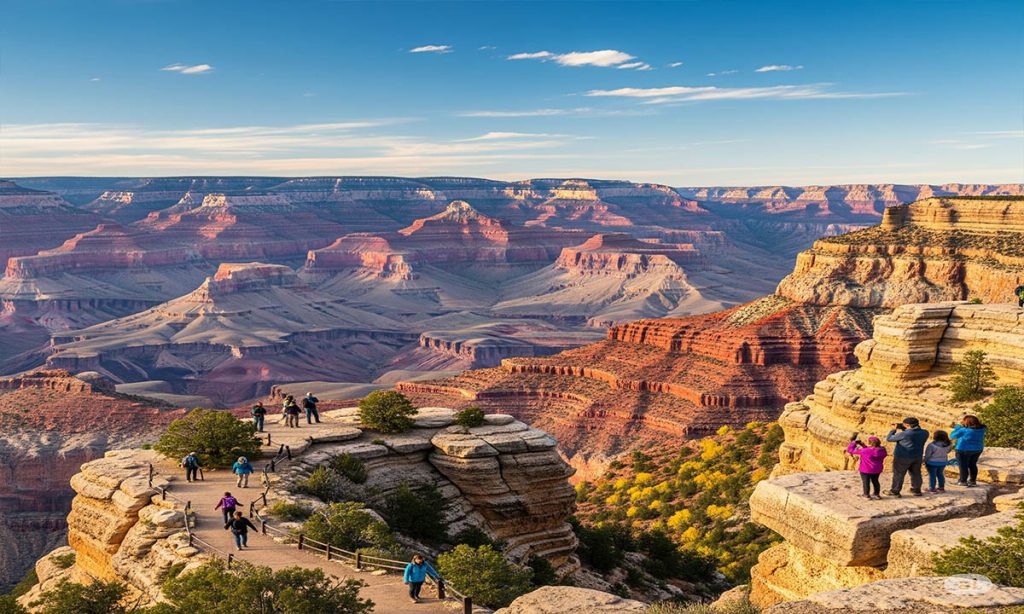
The panoramic South Rim view highlights how Grand Canyon’s beauty changes with the seasons. In summer, the canyon is deep and sunlit but very hot and crowded; spring and fall bring comfortable temperatures and flowered or golden landscapes; winter adds snow on the rim. Understanding these seasonal differences – and when the North Rim is open (mid-May to mid-Oct only) versus the South Rim (open year-round) – is key to planning. In general, early spring or late fall have the fewest crowds, while summer is the busiest period. Below we detail weather and crowd trends by season: best time to visit grand canyon
Details below about best time to visit grand canyon
Seasonal Travel Planner
- High Season (June–August): Busiest months, with warm days and long daylight. Expect hot weather and crowds.
- Shoulder Seasons (Mar–May, Sep–Oct): Generally the best time of year to visit Grand Canyon for most travelers. Temperatures are milder, and crowds are thinner than in peak summer.
- Low Season (Nov–Feb): Cooler weather and lowest visitor counts. Many facilities remain open on the South Rim, but amenities may reduce and heavy snow closes the North Rim best time to visit grand canyon.
Each season has its pros and cons. Read on for details about weather, crowds, and activities in spring, summer, fall, and winter.
Spring (March–May): Mild Weather and Wildflowers
Spring is widely regarded as one of the best times to visit the Grand Canyon. Daytime highs on the South Rim climb from the 50s °F (10–15 °C) in March and April into the 70s °F (21–26 °C) by May. Afternoon sunshine is warm but not scorching, and wildlife and wildflowers often bloom. The weather is usually clear and dry – spring sees very little rain at the canyon – so you can hike and sightsee comfortably best time to visit grand canyon.
However, spring also brings spring-break families and holiday visitors. Late March and early April (Easter, Spring Break) can temporarily spike crowds. To beat any lines, start your day early: the park’s entrances and popular trails fill up by mid-morning. Pro tip: Arrive before 9 AM to avoid parking and gate queues. Nights in April can still drop to freezing at the rim, so bring layers. Overall, spring offers long days, pleasant temperatures, and vibrant canyon colors – often with fewer crowds than summer.
- Weather: Highs ~50–70 °F (10–21 °C); lows often near or below freezing at the rim.
- Crowds: Moderate. Peak spring-break weeks see more visitors, but March/May are quieter than summer.
- Activities: Ideal for hiking popular rim trails (Bright Angel, South Kaibab) and river rafters prepare for snowmelt flows. Spring wildflowers (like Sego lilies) may bloom on the rim best time to visit grand canyon
Summer (June–August): Peak Season, Heat & Monsoons
Summer is peak tourist season at the Grand Canyon. June through early August bring long, sunny days and the largest crowds – especially in July when kids are out of school. Expect hot temperatures and dry air. At the South Rim, daytime highs often reach the 80s °F (27–32 °C). Down in the inner canyon (Bryce Canyon, Phantom Ranch) it regularly exceeds 100 °F (38 °C). The hottest temperatures in Grand Canyon history have been recorded in summer – over 120 °F (49 °C) near the river. The North Rim is about 10 °F cooler due to its higher elevation (around 8,000 ft), but still warm (summer highs in the 70s °F) best time to visit grand canyon
Crowds peak June–August, so trails, viewpoints, and facilities can be very busy. Plan ahead: reserve lodging or campgrounds many months in advance. Parking lots can fill by 9–10 AM on busy days. Despite the heat, summer has advantages: every visitor service and shuttle is running, and more remote backcountry areas are accessible. Keep in mind afternoon thunderstorms are common (the Arizona monsoon) – these can deliver sudden downpours and lightning. Hikers should start very early to avoid midday sun (bring lots of water and sunscreen). If possible, try to avoid the absolute peak: “The park gets packed in June, so try to avoid that time if possible,” advises a recent travel guide best time to visit grand canyon.
- Weather: Hot. South Rim mid‑80s °F (27°C) by day; inner canyon over 100 °F.
- Crowds: Highest of the year. Expect lines at park entrances and full shuttles.
- Rain: Afternoon monsoon storms start in July, often clearing by evening. Bring rain gear and be cautious near cliffs during storms.
- Activities: All amenities open. Ideal for camping and horseback tours (cool nights), or rafting down the Colorado River. Shaded hikes (Hermit Trail) and river excursions help escape the heat best time to visit grand canyon
Fall (September–November): Comfortable Weather & Fewer Crowds
Fall is often called the Grand Canyon’s second best season to visit. As summer’s extreme heat wanes, conditions become very pleasant. September remains warm (rims still in the 60s °F / 15–21 °C) but more bearable; by October highs fall into the 50s °F (10–15 °C). Nighttime lows quickly cool into the 30s–40s °F. Critically, summer rains taper off by mid-September, giving way to clear, dry autumn skies. This drier period means fewer thundershowers, improving hiking and photography conditions best time to visit grand canyon
Crowds in early fall are lower than summer’s peak. After Labor Day, visitor numbers drop significantly – late September and October often see “moderate weather, fewer crowds, and spectacular autumn colors” (especially on the higher North Rim). October and early November are known as a “locals’ favorite” time for the canyon, when the foliage in the forests (pinyon, maple) around the rims turns gold and red. Do note: late fall weather can be unpredictable. Rare early snow or high winds can occur, so pack a warm jacket. By late November, daytime temperatures can dip near freezing, and short days limit hiking time best time to visit grand canyon
- Weather: Highs generally 50–60 °F (10–20 °C) from Oct–Nov. Nights start to freeze.
- Crowds: Lower than summer. Lulls after Labor Day make weekdays especially quiet.
- Highlights: Fall foliage on the North Rim (open through Oct 15) and South Rim’s golden aspen groves. Cooler temps are great for longer hikes.
- Activities: A fantastic time for rim hikes, photography, and camping with smaller crowds. For rafting, river trips typically end in early September, so late fall boat trips are rare best time to visit grand canyon
Fall evenings at Grand Canyon can be spectacular, with colorful clouds and sunsets lighting up the canyon walls. The image above shows a cloud-filled sunset over the South Rim, a scene common in late summer and autumn. Many visitors find October especially photogenic, as the lowering sun and calm weather create dramatic lighting on the canyon’s rock layers best time to visit grand canyon
Winter (December–February): Cold and Quiet, but Snowy Beauty
Winter at the Grand Canyon offers peace and solitude, but also harsh conditions. Visitor numbers plummet from autumn levels. Except for holidays (Christmas/New Year), park roads and overlooks are quiet. The South Rim (elevation ~7,000 ft) stays open year-round, but be prepared: “Winter conditions on the South Rim can be extreme. Be prepared for snow, icy roads and trails, and possible road closures,” warns the National Park Service. It typically snows at the rim from November through March, with an average of 50–100 inches per winter. After a storm, the canyon’s layers are dusted in white, creating unforgettable views – but chains (or 4WD) may be required on roads. Daytime highs in winter are chilly (often in the 40s °F, 4–9 °C) and lows can drop into the teens. Along the Colorado River floor, air settles and highs may only reach the 40s–50s °F best time to visit grand canyon.
Travel is possible but limited. Most trails remain open (though icy) and the visitor center and lodges run on winter hours. The North Rim is closed after mid-October through mid-May due to deep snow – it reopens mid-May. In contrast, Grand Canyon West (the Hualapai-owned area with the Skywalk) stays open all winter, though it lies outside the National Park. Advantages of winter travel include very low prices (off-season lodging deals) and uncrowded overlooks. “Winter might just be your perfect time to visit” if you want quiet solitude. Dress in layers, bring crampons if hiking, and check road conditions best time to visit grand canyon
- Weather: Highs in the 40s °F (4–9 °C) at the rim; frequent snow.
- Crowds: Fewest visitors (free-flowing parking lots). Great for photography and starry skies.
- Access: South Rim open; North Rim closed (road closed late Oct–mid-May). Some scenic drives (Hermit Road) reopen for private vehicles.
- Safety: Trails and roads can be icy. Plan ahead and carry warm clothing. The Visitor Center and mule rides operate, but some summer-only services (like camping) are closed best time to visit grand canyon.
South Rim vs. North Rim (vs. West Rim)
It’s important to distinguish Grand Canyon South Rim and North Rim when planning timing. The South Rim (where most visitors go) is accessible year-round. In contrast, the North Rim sits about 1,000 feet higher and is much more remote. Heavy snow forces closure of the North Rim road from late October through mid-May. Its brief season (mid-May to Oct 15) overlaps the warmest months; summer is the only time you can stay at North Rim lodges. The North Rim is cooler than the South Rim (summer highs ~70s °F) and far less crowded even in peak season. Many hikers and campers prize the North Rim’s solitude and lush vegetation (including more forests) – fall colors are particularly vivid there. If you’re set on visiting the North Rim, plan for a summer or early fall trip best time to visit grand canyon.
Lastly, note Grand Canyon West (Hualapai Reservation) is not part of the national park but is open all year. It’s closer to Las Vegas than the rims. West Rim attractions (like the glass Skywalk) can be done in winter and spring; it’s busiest in summer but often less crowded than the Park’s rims. (We focus on the official park rims in this guide.) best time to visit grand canyon
Tips for Planning Your Grand Canyon Visit
To make the most of your trip regardless of season, consider the following tips:
- Check Weather & Park Alerts: Always review the NPS Grand Canyon weather and current conditions before you go. Rain, lightning, and flash floods (July–Sept) or snow (Nov–Mar) can affect access.
- Stay Hydrated & Prepared: Even in mild seasons, sun and dry air can dehydrate you. Carry plenty of water (1+ liter per hour hiking) and wear sun protection year-round. Pack layers: mornings and evenings can be cold in spring/fall, and summer nights are cool.
- Book Early in Peak Season: If visiting June–August or a holiday weekend, reserve lodging, tours, and shuttles months ahead. Campgrounds fill quickly in spring/fall too. For peak hiking trails, getting to the trailhead by dawn avoids parking crowds.
- Use the Shuttle Buses: On the South Rim, free shuttles run on major routes (Hermit Road and Kaibab/Rim Road) from March through November. Riding a shuttle saves parking hassles at crowded viewpoints.
- Leave No Trace: The park’s delicate ecosystem deserves respect. Stay on trails, pack out trash, and never feed wildlife.
- Free Park Days: If timing is flexible, you might take advantage of NPS fee-free days (e.g. Presidents’ Day, National Park Week, Veterans Day) to save the $35 per vehicle entry fee.
- Activities by Season: Tailor your activities to the time of year. Spring/fall are great for extensive hikes and backcountry permits (cooler temps). Summer is perfect for river rafting tours to beat the heat. Winter offers unique opportunities like snowshoeing or simply enjoying empty overlooks and sunrise serenities best time to visit grand canyon
Examples: In April or May, many visitors hike out-and-back on Bright Angel Trail to Plateau Point or even Phantom Ranch, enjoying wildflowers on the way. In July/August, popular activities include early-morning sunrise watching at Mather Point (beating the crowds) and late-evening ranger programs. In October, photographers flock to Mather Point or Desert View Watchtower for fall-color views. And on a winter morning, you might be one of only a handful watching a snowy sunrise at Yaki Point best time to visit grand canyon.
Conclusion
Choosing the best time to visit the Grand Canyon National Park ultimately depends on what you want from your trip. If you seek mild weather and manageable crowds, plan for spring (March–May) or fall (September–October). Summer offers long days and full services but requires heat preparation, while winter gives unparalleled tranquility at the expense of cold and potential snow. We hope this guide helps you pick the ideal season for your visit. No matter when you go, the Grand Canyon’s grandeur is sure to leave a lasting impression – just be sure to plan ahead and pack for the conditions you’ll face best time to visit grand canyon
Have you visited the Grand Canyon? Leave a comment below to share your favorite season or ask questions. Don’t forget to share this guide on social media if you found it helpful. Safe travels and enjoy the beauty of the canyon in whatever season you choose!
FAQs
Q: What is the best time to visit the Grand Canyon? The ideal time is generally spring (March–May) or fall (September–October). These shoulder seasons bring mild daytime temperatures and fewer crowds compared to summer. April and May, in particular, often have clear skies and pleasant conditions on the South Rim. Fall also offers comfortable weather and dramatic autumn colors.
Q: When is the Grand Canyon most crowded? The park’s busiest period is summer (June–August), especially July. School vacations draw large families, and many facilities are at full capacity. To avoid the largest crowds, steer clear of mid-June through early September if possible.
Q: When is the best time to visit the Grand Canyon South Rim? Spring and fall are typically best for the South Rim as well. The South Rim is open all year, but summer heat and tourism can make June–August uncomfortable. Late March–May or mid-September–October have milder temperatures and sparser crowds on the Rim best time to visit grand canyon
Q: When is the North Rim open? The North Rim is only open mid-May through mid-October each year. Heavy snow closes the road from late October until May. Peak North Rim season is June–August, when its higher elevation means cooler weather (highs in the 70s °F) and very few people compared to the South Rim best time to visit grand canyon
Q: Is winter a good time to visit the Grand Canyon? Winter (Dec–Feb) offers the fewest crowds and snow-dusted vistas, but conditions can be challenging. The South Rim remains open year-round, but be prepared for snow and sub-freezing temperatures. Many visitors enjoy the park’s serenity in winter – if you plan carefully (check road conditions and layer up), this can be a magical time to go best time to visit grand canyon
Q: What is the best month to see the Grand Canyon? Months like April, May, September, and October are often singled out. For example, April and May have warm days and abundant spring colors, while October has cooling temperatures and clear skies. Winter months (Nov–Feb) are the least visited, and summer (Jul–Aug) is the hottest, so for many the “best” month falls outside of those extremes best time to visit grand canyon
Q: When is monsoon season at the Grand Canyon? The Arizona monsoon runs roughly July through mid-September, peaking in July and August. During this time expect daily afternoon thunderstorms in the canyon. Monsoon storms can cause flash floods, so hikers should start early and stay alert on trails during those months best time to visit grand canyon
Each season has its trade-offs, but with this information in hand you can choose the best time to visit Grand Canyon that fits your interests – whether it’s mild hiking weather, smaller crowds, or budget travel in the off-season best time to visit grand canyon
Sources: Authoritative travel guides and National Park Service data, including NPS park statistics and official weather/climate information, were used to inform this guide.

5 thoughts on “Best Time to Visit Grand Canyon National Park”